 MemoryQuext
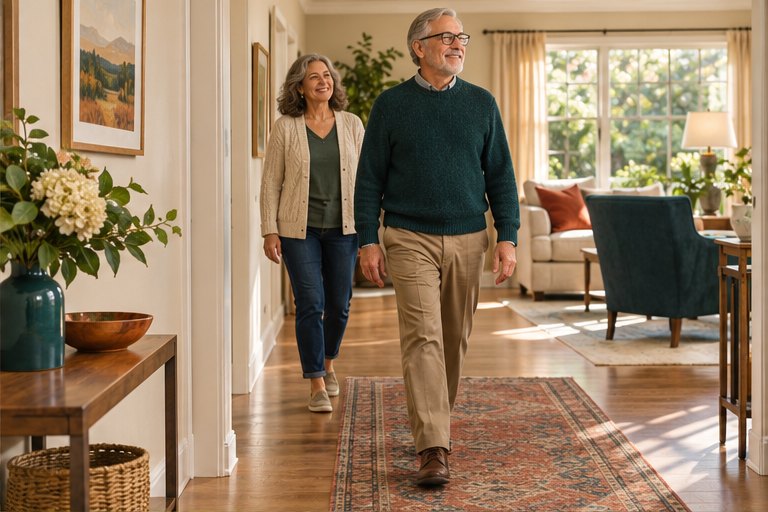
Finding your way
“Where is the living room?”
Get a simple cue to help find a familiar room.

App in development · Coming soon
MemoryQuext is a coming-soon app designed to help you find your way around your home, remember where things are, and follow familiar routines.
Planned for Android and iPhone, with optional support for compatible smart glasses.
For me
When a familiar task feels harder, a short cue may help. Here’s what we’re designing MemoryQuext to do. Why these cues may help.
Finding your way
Get a simple cue to help find a familiar room.
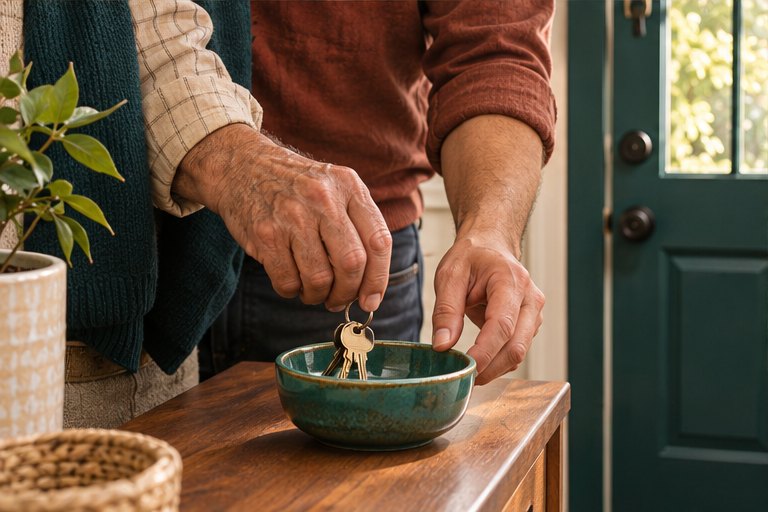
Finding your things
Hear a reminder of where you usually keep an item, like the bowl by the door.

Optional medication help
Get help reading a label or a reminder based on a schedule agreed with your healthcare team.
Read about medication helpFor family and friends
Familiar cues can make daily routines easier to follow. The person who lives there should have a say in what gets added and who can help.
Optional medication help
MemoryQuext is being designed to help read a medicine label aloud and give reminders from a schedule already agreed with your healthcare team. A reminder does not tell you whether a dose was taken.
We’re exploring ways to help describe what a pill looks like or compare it with a reference a pharmacist has already checked. The app won’t independently identify a pill or tell you what to take.
Read the FDA’s guide to asking your pharmacist about medicines
Understanding memory loss
Occasional forgetfulness can have many causes and does not by itself mean dementia. Dementia can affect how a person remembers, thinks, and manages daily activities.
Younger-onset dementia begins before age 65. “Early stage” describes how far the condition has progressed, regardless of age. If memory changes are getting in the way of daily life, talk with a healthcare professional.
MemoryQuext is being designed to make familiar routines a little easier and help people stay connected to life at home. It cannot diagnose or treat dementia or tell you whether living at home without more support is safe.
The research behind the idea
In a pilot trial across 15 long-term care communities, residents made fewer wrong turns when routes had clear signs and distinctive pictures or objects. Those were physical cues in care settings, not a test of an app at home. Read the study on finding your way.
In a controlled study of a prototype called GO-Finder, people more accurately located misplaced items when they could see a picture of where the item was last seen. It was a small usability study, not a clinical test in people with dementia. Read the GO-Finder study.
These studies inform a simple idea we want to test: use familiar rooms and objects to offer a short cue, like “Your keys usually go in the bowl by the front door.” They did not test MemoryQuext or show that it helps people stay at home longer.
Questions
No. The app is in development. There is no download or release date yet.
No. We’re planning phone apps for Android and iPhone. We’re also designing for compatible smart glasses as an optional hands-free way to get cues. Supported models have not been announced.
The planned setup is designed for you and a family member, friend, or caregiver you choose.
No. It is designed for everyday cues. It does not provide medical care, supervision or emergency help.
No. Ask your pharmacist if you’re unsure what a pill is or how you should take it.